 We all want our children to be well-mannered, but we also know how hard it is to convince them to do anything, much less be polite and respectful. With poor role models on television — and right beside them in the classroom — how do you get your kids on the path to good behavior? We spoke to experts about teaching your kids manners at every age.
 Politeness in speech: Modulate your tone when you speak to your baby and use social niceties such as “please” and “thank you” when speaking directly to them or in conversations in their presence. Your example will guide them as they learn to speak.
Nice Touch: Gently direct your baby on how to treat parents, siblings and pets. Teach baby not to grab at someone’s face or hair by physically moving their hand and demonstrating a soft stroke on a dog’s back or by rubbing their fingers across your hair. This will teach them limits and introduce the concept of cause and effect in relation to their actions. “Gentleness will translate as they get older into politeness,” says Ian James Corlett, author of E is for Ethics, How to Talk to Kids About Morals, Values, and What Matters Most.
Respect for Others: Practice well-mannered activities in front of your baby, such as holding the door for someone, saying “excuse me” when you bump into them, or picking something up after you drop it. Give commentary to your baby on what you just did and why.
As toddlers’ grasp on language develops and they begin to move around more, you can begin to practice good manners with them. But during these years, parents must realize that manners are taught, not inherent, and it will take time for the lessons to become ingrained. So repeat, repeat, repeat!
“At this age, play is still not always interactive, but parents can start to remind children to respect others’ space, not grab, not hit. Essentially, this is the time of ‘play nice,'” says Dr. Jennifer Hartstein, a child psychologist from Manhattan. And, she stresses, “Parents need to be hands-on during this time, as these concepts are still difficult to understand.”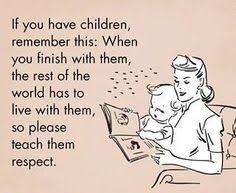 Sharing: Hartstein recommends saying to children, “Be gentle” and “we have to share,” while taking away the fought-over toy.
Politeness: Practice saying “please” and “thank you” often — but expect to say it a lot before they get it.Patience: Introduce the concept of “waiting,” which applies to situations as diverse as not interrupting Mom’s phone conversation to allowing a sibling to be first at the sink. “It may be helpful for parents to put their hand on their child’s shoulder or around them to help them wait,” Hartstein suggests. If they persistently try to interrupt adult conversations, teach them to say, “Excuse me, please,” and then give them your attention

No comments:
Post a Comment